
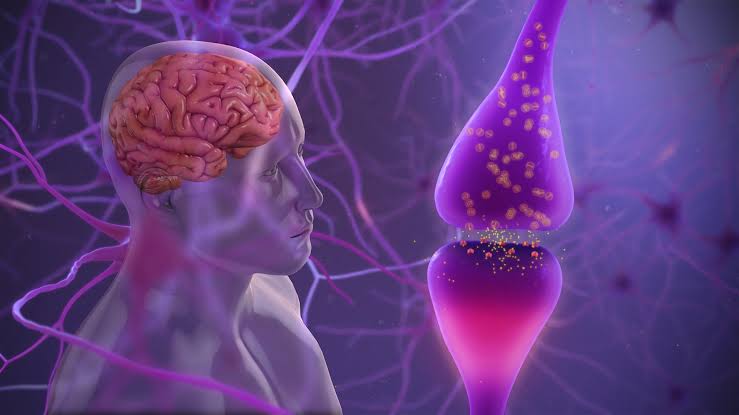
Movement is one of the vital characteristics of the animal kingdom. Without movement, animals are equivalent to plants. But there are some neurological diseases which make movement a disorder. On a normal day, we get up and walk as well as do our daily activities. Our movement is normal. We walk by moving our legs, as much as our brain wants to do. when we work, our hands do work as much as we want.

Some neurological diseases are there which affect our brains. In medical language, we see it as a movement disorder. There are varieties of disorders in this group. Some make us slow, some fast. Sometimes we feel like we are walking in a drunken state without drinking. Sometimes the movement is so complex that the patient feels like dancing. Normal movement is eukinetic. If it decreases it’s hypokinetic if it increases its hyperkinetic.

WHAT ARE THE SYMPTOMS OF MOVEMENT DISORDERS
SLOWNESS
It’s a very common symptom. The patient feels slow while walking. Every activity becomes slow. He walks like a robot walking. Even the movement of our intestines becomes slow. It leads to constipation. Due to slow walking, many patients suffer from falls. The symptom is commonly seen in parkinson’s syndrome.
SHAKING
Shaking of hands is a very common symptom. It can be a very mild disease of old age. Sometimes it might be a symptom of very complex movement disorder. If shaking occurs in high amplitude, it becomes difficult to control your hand. These people face too many difficulties in doing official work. Sometimes day to day-to-day activities like taking food, and drinking water becomes very difficult. Sometimes shaking becomes more common while doing work, sometimes in rest. Its common in parkinson’s disease.
TIGHTNESS
Sometimes the limbs become so tight that, it becomes very difficult to move. Doing daily activities becomes difficult. It feels as if limbs have become unnecessarily tight. This can be seen in stroke and Parkinson disease.
UNSTEADINESS
Sometimes, we feel unsteadiness. It feels as if we are floating on air. Sometimes It’s associated with fall. It feels like someone pushing us while walking. In many cases, it’s associated with head reeling and hearing problems. When the person takes food, he smears food on his face. These symptoms are common in ataxic diseases.
DANCING
Some patients show a peculiar movement like purposeless dancing. As if some ghost has entered inside him/her and made him/her dance. The patient feels difficulties to control the limbs. It becomes very difficult to control the movement. Sometimes these movements are in families. In children, these might occur due to some infections, though there are numerous causes to it.
TWISTING
The limbs become twisted without purpose. Sometimes neck and trunk can be involved in this disease. The patients feel extreme difficulty while doing daily work. In some varieties the twisting increases on doing work. Many complex Parkinson syndrome and Wilson disease can have similar presentations. Many conditions might be familial.
FLINGING
Sometimes the movements are very rapid and jerk type. As if suddenly someone pulled the hand. It can injure someone standing nearby.
CHEWING
Some symptoms are like continuous chewing. It feels like the patients are chewing something continuously. Even they face dental erosion due to unnecessary chewing. Sometimes, tongues are injured. This is a common movement disorder which is seen due to side effects of several drugs.
ALIEN HAND
It’s a very peculiar disease. In it the hand never obeys command. It feels as if the hand is controlled by some outworldly forces. Even most of patients think so. The patient tries hard to control the hand by other hand.
There are many other symptoms. But everyone must be aware of these diseases. If you feel like this consult a neurologist for a proper diagnosis. Because these diseases are treatable and good improvement occurs if diagnosis becomes early.
Happy movement disorder day
Please read and share for general awareness as the awareness about movement disorders are very minimal even among medical professionals.
Its a
Leave a Reply