
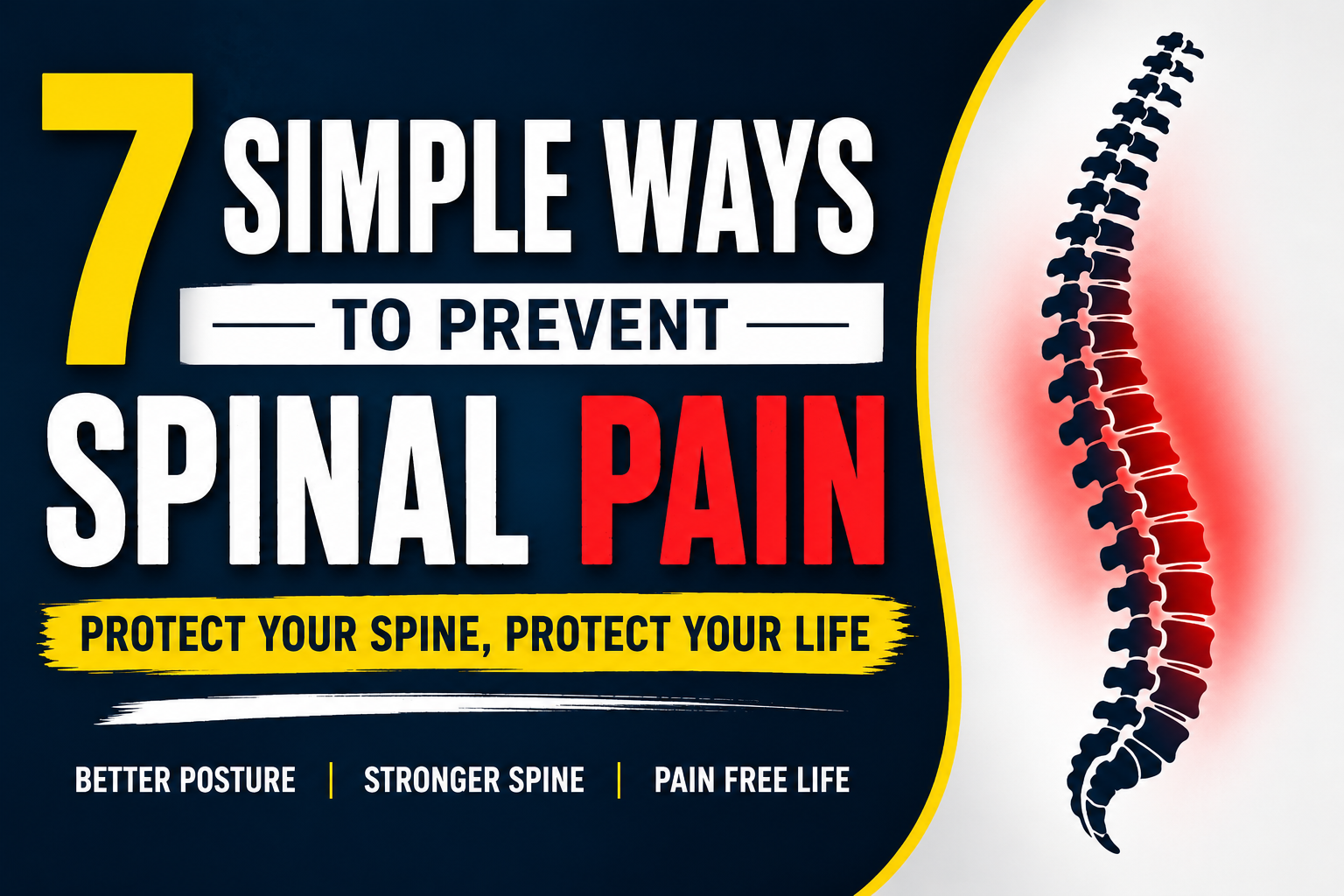
Your spine is the backbone of your body—literally. It supports your posture, protects the spinal cord, and allows you to move freely. Yet, modern lifestyles filled with prolonged sitting, poor posture, and lack of exercise are making spinal pain increasingly common, even among young adults.
Fortunately, a few simple daily habits can go a long way in keeping your spine healthy.

1. Maintain Good Posture
Whether you’re working on a computer or using your smartphone, always keep your back straight, shoulders relaxed, and feet flat on the floor. Avoid slouching or bending your neck forward for prolonged periods, as this increases stress on the cervical and lumbar spine.
2. Don’t Sit for Too Long
Sitting continuously for hours weakens the muscles that support your spine. Follow the 30–30 rule: Stand up, stretch, or walk for 2–3 minutes after every 30 minutes of sitting. These short breaks reduce stiffness and improve blood circulation.
3. Strengthen Your Core
Strong abdominal and back muscles provide essential support to your spine.
Include activities such as:
Walking
Swimming
Yoga
Pilates
Core-strengthening exercises like planks
Aim for at least 150 minutes of moderate physical activity per week.
4. Lift Objects Correctly
Improper lifting is a major cause of back injuries. Instead of bending at the waist:
– Bend your knees.
– Keep the object close to your body.
– Lift using your leg muscles.
– Avoid twisting while lifting.
5. Sleep Smart
A good mattress and proper sleeping posture help your spine recover overnight.
Sleep on your back or side.
Avoid sleeping on your stomach.
Use a pillow that keeps your neck aligned with your spine.
Replace old, sagging mattresses when necessary.
6. Maintain a Healthy Weight
Excess body weight places additional stress on the lower back and accelerates wear and tear of the spinal joints. A balanced diet combined with regular exercise helps reduce this burden and promotes long-term spinal health.
7. Don’t Ignore Warning Signs
Seek medical attention if back pain is associated with:
– Weakness in the arms or legs
– Numbness or tingling
– Difficulty walking
– Loss of bladder or bowel control
– Fever, weight loss, or pain following significant trauma
Early diagnosis can prevent permanent neurological complications.
Final Thoughts
Your spine supports you every day—it’s time to return the favor. Simple lifestyle changes such as maintaining good posture, staying physically active, lifting safely, and paying attention to early warning signs can significantly reduce your risk of chronic spinal pain.
Take care of your spine today so it can take care of you for years to come. Read and share for wide awareness!!
Happy Sunday
Leave a Reply