
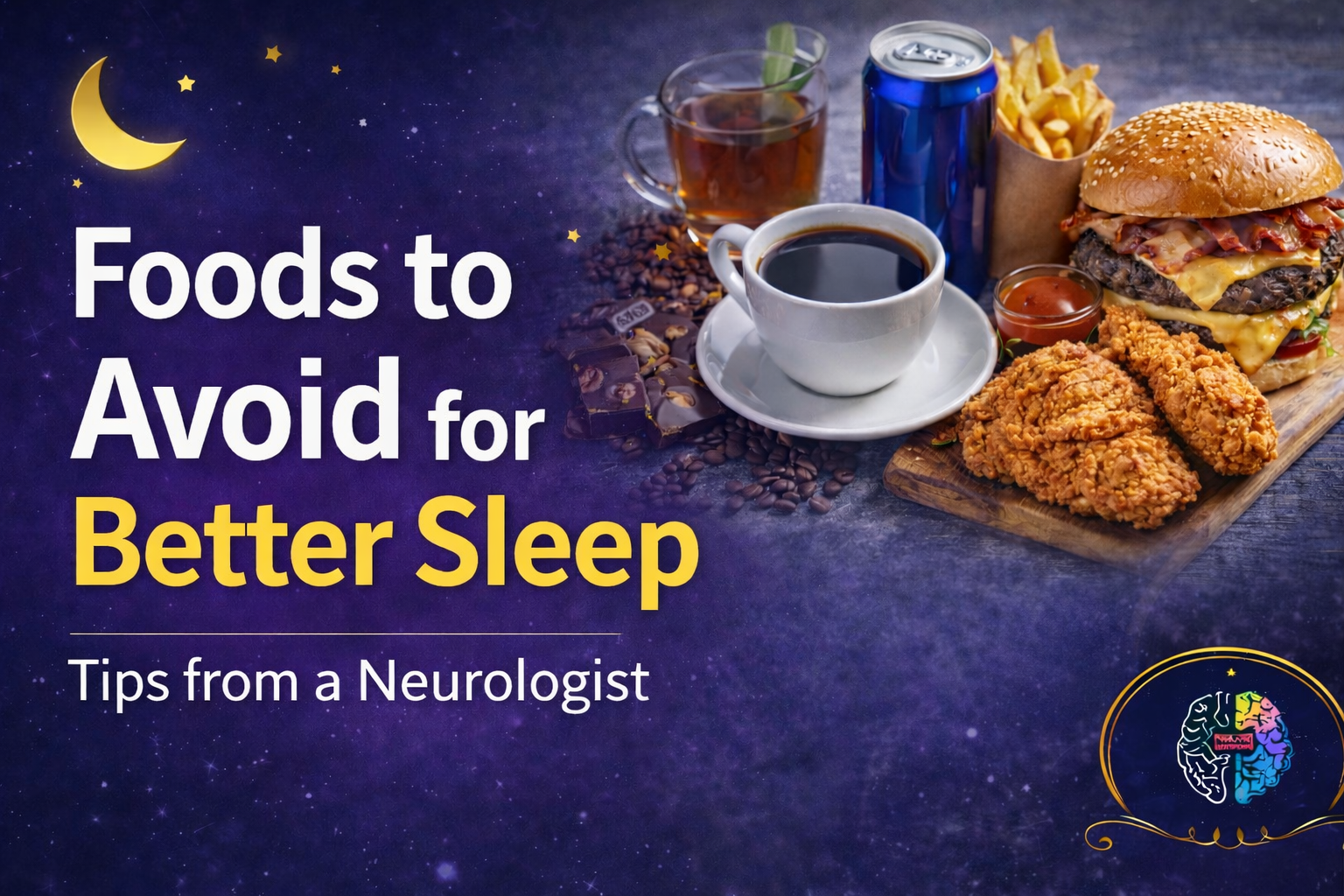
Sleep is not just rest for the body—it is active repair for the brain. While stress, screens, and schedules often take the blame for poor sleep, diet is one of the most overlooked causes of insomnia and disturbed sleep.
What you eat, especially in the evening, directly affects melatonin release, digestion, brain arousal, and REM sleep. If you struggle with difficulty falling asleep, frequent awakenings, or unrefreshing sleep, the problem may be on your dinner plate.
Let’s explore the foods to avoid for better sleep, explained through science and practical wisdom.

1. Caffeine-Rich Foods and Beverages
Caffeine is a central nervous system stimulant that blocks adenosine, the chemical responsible for sleepiness.
Common sources include:
Coffee
Tea (especially black and green tea)
Energy drinks
Chocolate
Cola and soft drinks
Even if caffeine doesn’t stop you from falling asleep, it reduces deep sleep and REM sleep, leading to tired mornings.
Tip: Avoid caffeine at least 6–8 hours before bedtime.
2. Spicy and Highly Seasoned Foods
Spicy foods increase body temperature and can trigger:
Acid reflux
Heartburn
Gastric irritation
These effects disturb sleep continuity and can cause frequent night awakenings.
Better choice: Light, mildly seasoned meals in the evening.
3. Heavy and Fatty Meals at Night
Greasy and heavy foods delay gastric emptying, forcing your digestive system to work when your brain is trying to rest.
Examples include:
Fried foods
Fast food
Creamy gravies
Excessive meat portions
This leads to poor sleep quality and fragmented sleep.
Rule of thumb: Finish dinner 2–3 hours before sleep.
4. Sugary Foods and Desserts
Excess sugar causes rapid spikes and drops in blood glucose, activating stress hormones like cortisol and adrenaline.
This may result in:
Difficulty falling asleep
Nighttime awakenings
Restless sleep
Avoid sweets, cakes, ice cream, and sugary drinks late at night.
5. Alcohol (A Common but Misleading Sleep Aid)
Alcohol may help you fall asleep faster, but it severely disrupts REM sleep, the phase essential for memory, mood regulation, and brain detoxification.
Effects of alcohol on sleep:
Reduced REM sleep
Night sweats
Early morning awakening
Alcohol sedates—it does not restore sleep.
6. Large Amounts of Fluid Before Bed
Drinking too much water or beverages at night increases the urge to urinate, causing sleep fragmentation.
This disrupts the natural sleep cycle, especially in older adults.
Limit fluids 1–2 hours before bedtime.
7. Ultra-Processed and Packaged Foods
Packaged snacks contain additives, preservatives, and excess salt that can overstimulate the nervous system.
These foods may cause:
Brain alertness
Bloating
Poor sleep efficiency
What to Remember: Sleep Begins in the Kitchen Good sleep hygiene is incomplete without dietary discipline. The brain sleeps best when digestion is calm, hormones are balanced, and inflammation is minimal.
By avoiding these sleep-disrupting foods, you support:
– Better melatonin secretion
– Deeper REM sleep
– Improved memory and mood
– Restorative brain function
– Sleep is not an event—it is a process.
And that process begins with what you eat.
Please read and share for wide awareness
Happy Sunday!!!!
Leave a Reply