
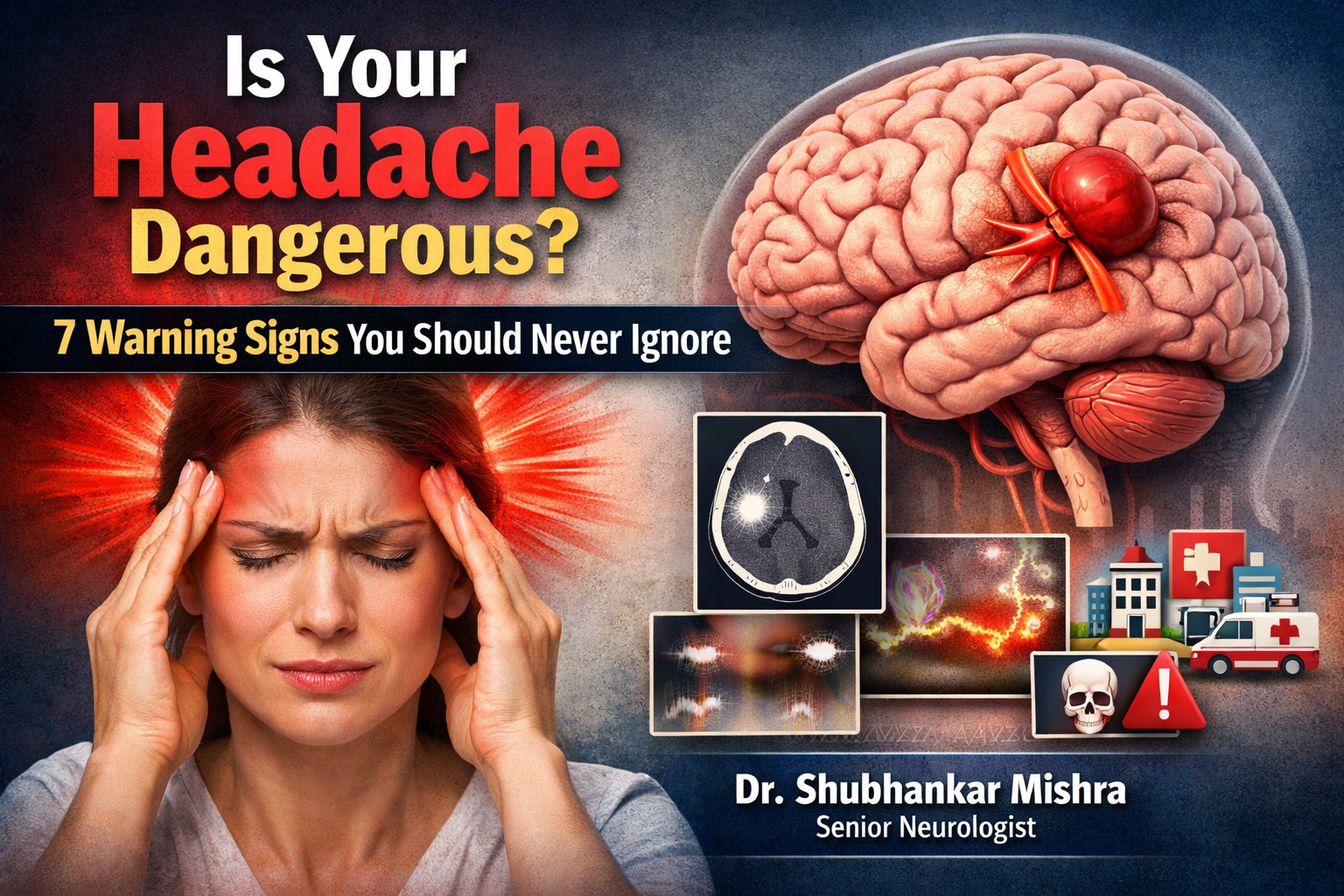
Headache is one of the most common neurological problems worldwide. According to the Global Burden of Disease Study, nearly 50% of adults experience at least one headache each year, and migraine alone affects over 1 billion people globally.
The good news?
Most headaches are not dangerous.
The important question is: When should you worry?
Common Types of Headache (Usually Not Dangerous)
1. Migraine
– Throbbing, often one-sided
– Nausea, vomiting
– Light sensitivity
– May have visual aura
– Migraine affects around 1 in 7 people and is more common in women.
2. Tension-Type Headache
– Band-like tightness
– Stress-related
– Mild to moderate intensity
– This is the most common type of headache globally.
3. Cluster Headache
– Severe pain around one eye
– Watering of eye
– Occurs in clusters
Rare but very painful.
These are called primary headaches — they are not caused by a structural brain problem.
7 Dangerous Headache Warning Signs
If you notice any of these, seek medical attention urgently:
1️⃣ Sudden “Thunderclap” Headache
Worst headache of your life, reaching peak intensity in seconds.
May indicate brain bleeding (subarachnoid hemorrhage).
2️⃣ Headache with Weakness or Slurred Speech
Could signal a stroke. Stroke is now increasingly seen in younger adults in India.
3️⃣ Headache with Fever and Neck Stiffness
Possible meningitis — a medical emergency.
4️⃣ New Headache After Age 50
Needs evaluation to rule out vascular causes.
5️⃣ Early Morning Headache with Vomiting
May suggest raised brain pressure.
6️⃣ Headache After Head Injury
Even mild trauma can cause delayed bleeding.
7️⃣ Progressive Headache Over Weeks
Worsening pattern needs imaging evaluation.
How Common Are Serious Causes?
Brain tumors account for less than 1% of all headaches.
Subarachnoid hemorrhage occurs in about 1 in 10,000 people annually.
Over 90% of headaches seen in clinics are benign primary headaches.
This means panic is usually unnecessary — but awareness is essential.
Lifestyle Triggers That Increase Headache Risk
– Sleep deprivation
– Dehydration
– Skipping meals
– Excess screen exposure
– Stress
Studies show regular sleep and hydration can reduce migraine frequency by 30–40%.
Final Takeaway
Headache is common. Brain emergencies are rare. However, recognizing warning signs early can be life-saving. If your headache pattern changes, becomes severe, or is associated with neurological symptoms — consult a neurologist.
Your brain health should never be ignored.
Leave a Reply