
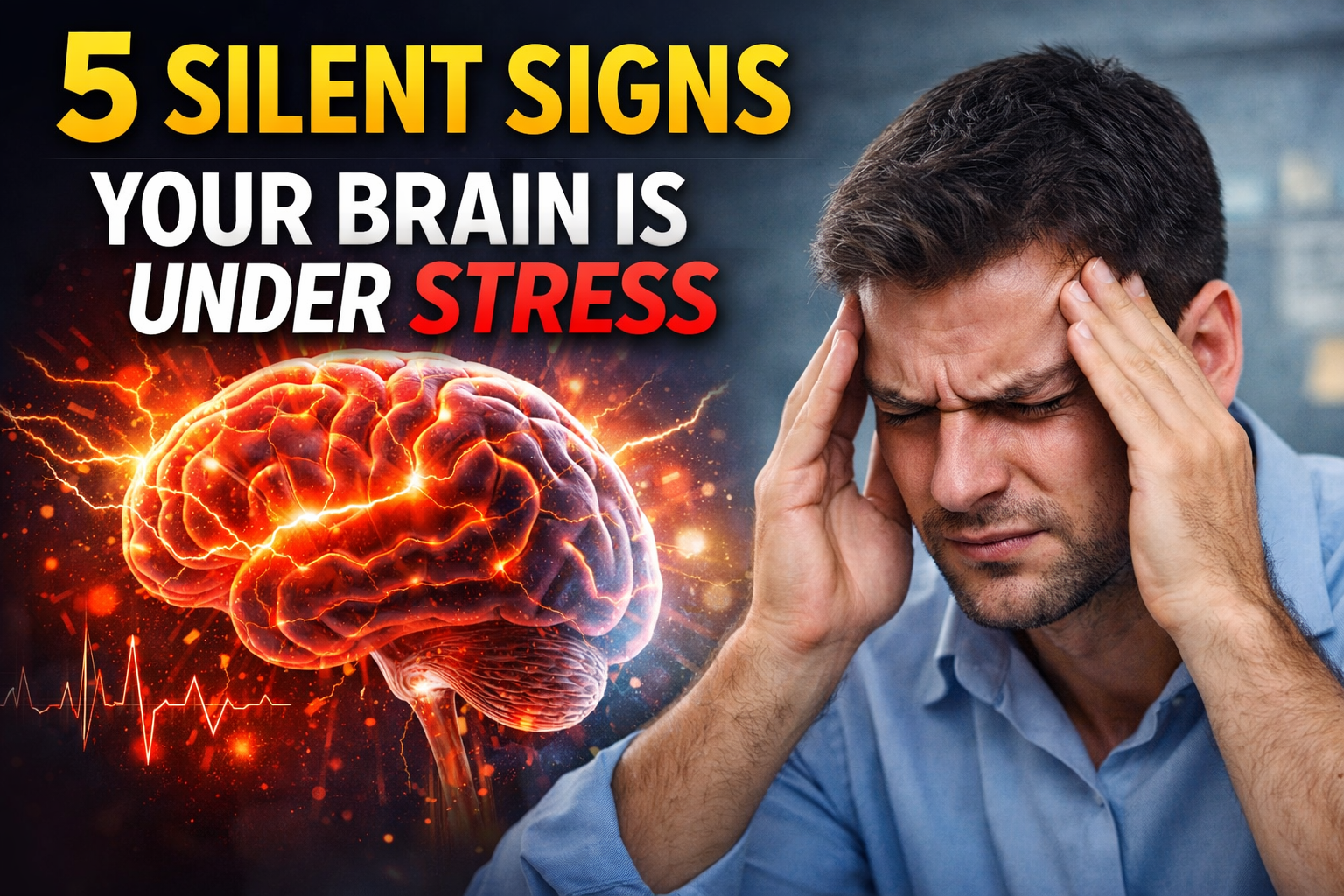
Modern life places constant pressure on the brain. Deadlines, poor sleep, excessive screen exposure, and emotional strain can silently affect brain function.

According to the World Health Organization, stress-related disorders are rapidly increasing worldwide. Chronic stress can affect memory, sleep, emotional balance, and overall brain health.
The challenge is that the brain often sends subtle warning signals before serious problems appear.
Here are five silent signs your brain may be under too much stress.
1. Persistent Brain Fog
One of the most common brain stress symptoms is brain fog.
People may notice:
– Difficulty concentrating
– Slower thinking
– Reduced productivity
– Trouble focusing on simple tasks
Stress hormones such as cortisol interfere with the prefrontal cortex, the brain area responsible for attention and decision-making.
If brain fog becomes frequent, it may indicate that your brain is experiencing excessive mental load.
2. Frequent Headaches
Stress is one of the leading triggers of headaches. Studies show that tension-type headaches account for nearly 70% of stress-related headaches globally.
Stress can cause:
– Muscle tension in the scalp and neck
– Increased sensitivity of pain pathways
– Disturbed sleep patterns
– Recurring headaches may therefore be a silent warning sign of chronic stress on the brain.
3. Poor or Disturbed Sleep
Sleep plays a crucial role in brain repair and memory consolidation.
When stress hormones remain elevated, the brain struggles to enter deep restorative sleep.
Common signs include:
– Difficulty falling asleep
– Frequent awakening at night
– Feeling tired even after sleeping
– Long-term sleep disturbance can increase the risk of migraine, anxiety disorders, and cognitive decline.
4. Irritability and Mood Changes
Chronic stress affects the brain’s limbic system, which regulates emotions.
This can result in:
Increased irritability
Emotional exhaustion
Low motivation
Mood swings
These changes occur because stress alters neurotransmitters such as serotonin and dopamine, which influence mood and emotional stability.
5. Memory Lapses
Occasional forgetfulness is normal. However, frequent memory lapses may indicate stress-related cognitive overload.
Examples include:
– Forgetting recent conversations
– Misplacing everyday objects
– Difficulty recalling information quickly
Research shows prolonged stress can affect the hippocampus, a brain region essential for memory formation.
Why Chronic Stress Affects Brain Health
Long-term stress is not just psychological—it can also affect neurological health.
Studies link chronic stress with increased risk of:
– Migraine and chronic headaches
– Depression and anxiety disorders
– Sleep disturbances
– Cognitive decline
– Stroke
Recognizing early warning signs helps protect long-term brain health.
How to Reduce Brain Stress
Simple lifestyle measures can significantly reduce stress on the brain:
– Maintain a consistent sleep schedule
– Engage in regular physical activity
– Limit excessive screen exposure
– Practice meditation or relaxation techniques
– Maintain social connections
These habits can improve mental clarity, sleep quality, and emotional balance.
Final Thoughts
The brain often signals distress before major illness develops. Brain fog, headaches, sleep problems, irritability, and memory lapses may indicate that your brain is under too much stress. Listening to these signals and making lifestyle adjustments can protect long-term brain health.
Leave a Reply