
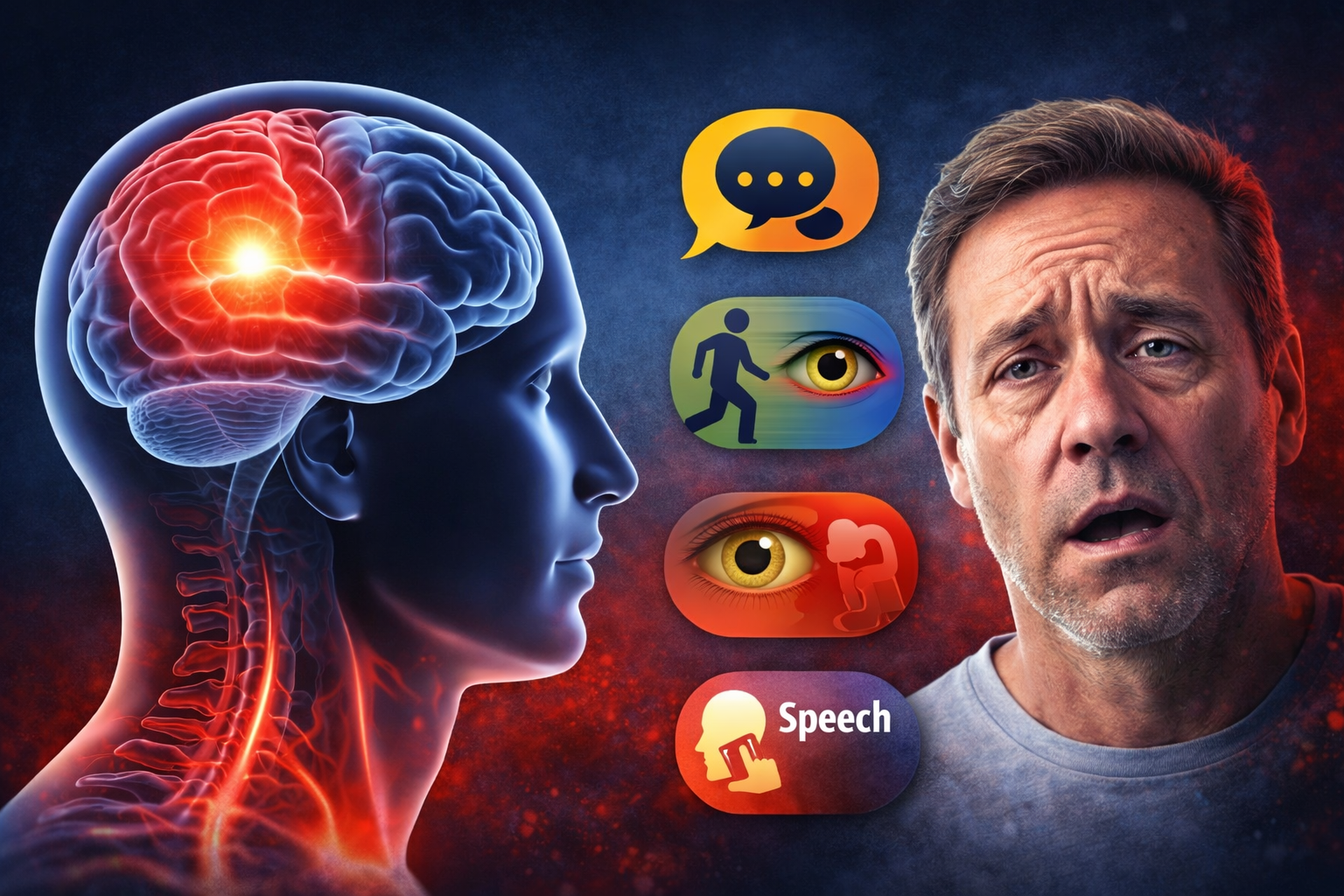
A stroke is one of the leading causes of disability and death worldwide. What many people do not realize is that the brain often sends silent warning signs before a stroke occurs. Recognizing these early signs of stroke can help people seek medical attention quickly and prevent serious brain damage.
Understanding the warning signs of stroke is one of the most important steps in stroke prevention.

What Is a Stroke?
A Stroke occurs when the blood supply to part of the brain is blocked or when a blood vessel ruptures.
Without oxygen and nutrients, brain cells begin to die within minutes. This is why doctors often say:
“Time lost is brain lost.”
The most common type is ischemic stroke, which occurs when a clot blocks a brain artery. In many cases, patients experience a Transient Ischemic Attack, often called a mini stroke, before the actual stroke occurs. A mini stroke is one of the most important early warning signs of stroke.
Recognizing these early stroke symptoms can save lives.
1. Sudden Weakness or Numbness
One of the most common early signs of stroke is sudden weakness in the body. Weakness might be in one arm or leg/ Difficulty lifting objects/ Numbness on one side of the body
This happens because the part of the brain controlling movement temporarily loses blood supply.
If this symptom appears suddenly, it could be a mini stroke symptom and requires urgent medical attention.
2. Temporary Vision Loss
Sudden vision problems are another silent warning sign of stroke.
People may experience: Blurred vision/ Double vision/
Sudden loss of vision in one eye
Some patients describe it as a curtain briefly covering their eye.
These symptoms indicate reduced blood flow to the visual areas of the brain.
3. Difficulty Speaking
Speech problems are among the most important stroke warning signs.
You may notice: Slurred speech/
Difficulty forming words/ Trouble understanding conversations
These symptoms may last only a few minutes but can signal an impending brain stroke.
4. Sudden Severe Headache
A sudden severe headache without an obvious cause may indicate a neurological emergency.
Warning signs include: severe headache/ Vomiting/ Sensitivity to light. This symptom is particularly concerning in hemorrhagic stroke, where bleeding occurs in the brain
5. Loss of Balance or Sudden Dizziness
Sudden dizziness or loss of balance can occur when blood supply to the brain’s coordination centers it’s the reduced.
Symptoms may include: Difficulty walking/ Sudden imbalance Feeling like the room is spinning
Many people mistake this for vertigo, but it can be an early stroke symptom.
6. Sudden Confusion
The brain needs constant oxygen to maintain normal thinking and memory. Reduced blood flow can cause: Sudden confusion/ Difficulty concentrating/ Trouble understanding speech
These symptoms can occur during a mini stroke and should never be ignored.
7. Facial Drooping
One of the most recognizable stroke symptoms is facial drooping.
Ask the person to smile.
If one side of the face droops, it may indicate a stroke affecting the facial nerve pathways in the brain.
Remember the FAST Stroke Test
Doctors use a simple test called FAST to recognize stroke symptoms.
F – Face drooping
A – Arm weakness
S – Speech difficulty
T – Time to seek emergency medical care
Recognizing these FAST stroke symptoms can help people get treatment quickly and improve survival.
Who Is at Higher Risk of Stroke?
Certain conditions increase the risk of developing a brain stroke.
Major stroke risk factors include:
High blood pressure
Diabetes
Smoking
High cholesterol
Obesity
Lack of exercise
Managing these conditions is essential for stroke prevention and brain health.
When Should You See a Neurologist?
If you experience any sudden neurological symptom, even if it disappears quickly, consult a neurologist immediately.
Many patients ignore these symptoms, only to develop a major stroke days later.Early diagnosis allows doctors to start stroke prevention treatment before permanent brain injury occurs.
Final Thoughts
The brain often whispers before it screams.
Those brief moments of weakness, confusion, vision problems, or speech difficulty may be your brain’s early warning signs of stroke.
Recognizing these symptoms early can prevent disability and save lives.
Awareness is the first step toward stroke prevention and brain health.
Author
Dr. Shubhankar Mishra
Senior Neurologist
Dedicated to improving public awareness about neurological diseases, stroke prevention, and brain health.
Leave a Reply