
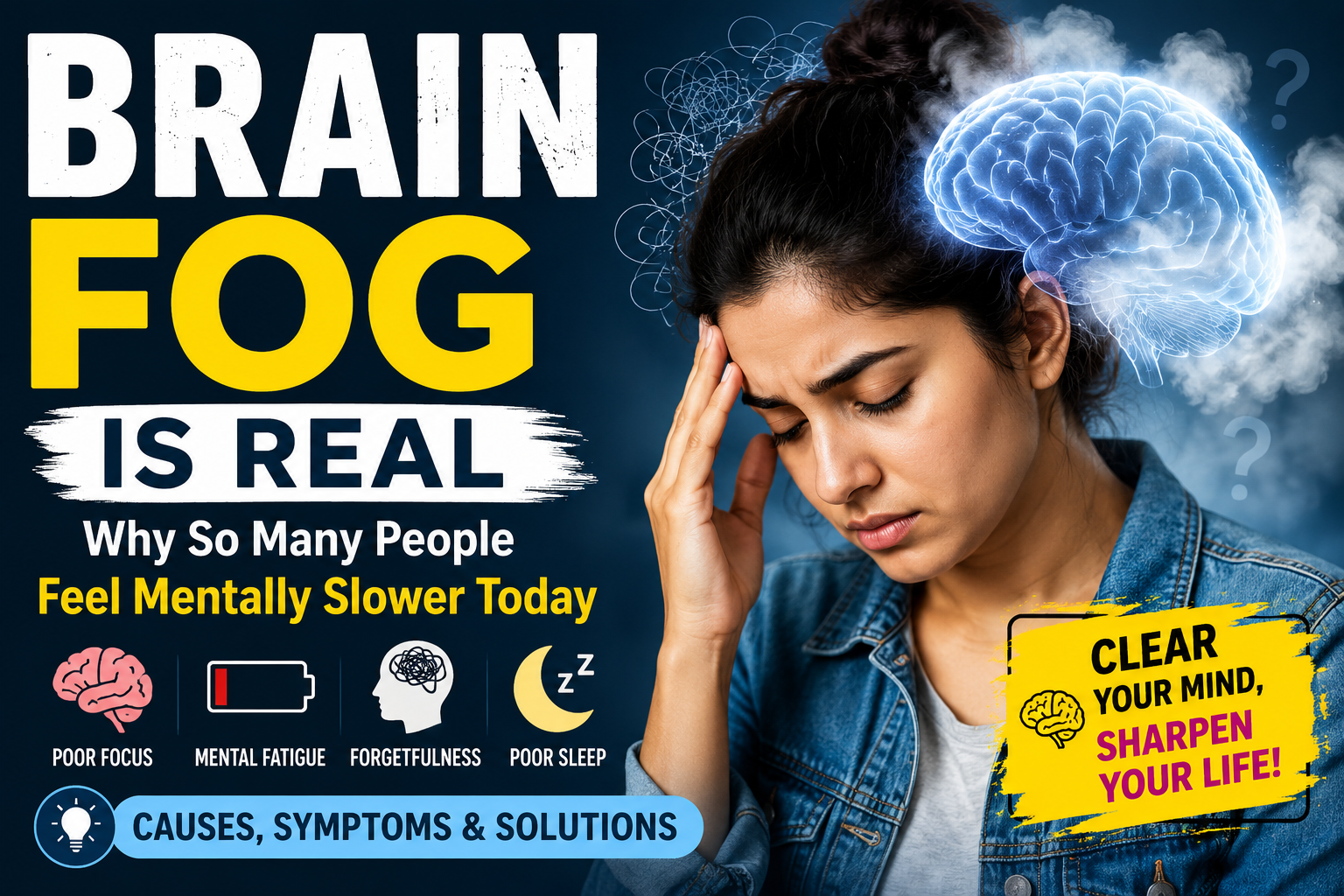
Do you often feel mentally tired, forgetful, or unable to focus despite getting through your daily routine? You may be experiencing brain fog — a common but often ignored condition affecting concentration, memory, and mental clarity.
Brain fog is not a disease itself but a collection of symptoms such as:
Poor concentration
Forgetfulness
Mental fatigue
Slow thinking
Difficulty multitasking
Feeling “disconnected” mentally
In today’s fast-paced digital world, brain fog is becoming increasingly common, especially among students, professionals, and young adults.
Why Does Brain Fog Happen?
1. Excessive Screen Time
Constant scrolling, multitasking, and information overload reduce attention span and mentally exhaust the brain.
2. Poor Sleep
Sleep is essential for memory, focus, and brain recovery. Chronic sleep deprivation significantly affects cognitive performance.
3. Stress and Anxiety
Persistent stress increases cortisol levels, which can impair concentration, memory, and emotional balance.
4. Nutritional Deficiencies
Low levels of Vitamin B12, Vitamin D, iron, and thyroid disorders can contribute to mental fatigue and poor focus.
5. Lack of Physical Activity
Exercise improves blood flow, mood, and brain function. Sedentary lifestyles worsen mental sluggishness.

Common Symptoms of Brain Fog
Difficulty focusing
Forgetting recent information
Mental exhaustion after small tasks
Reduced productivity
Trouble finding words
Feeling mentally “slow”
How to Improve Brain Fog
Improve Sleep: Aim for 7–8 hours of quality sleep daily.
Reduce Digital Overload: Limit unnecessary screen time and notifications.
Exercise Regularly: Even 30 minutes of walking daily can improve brain function.
Manage Stress: Meditation, yoga, deep breathing, and mindfulness help calm the brain.
Eat Brain-Healthy Foods: Maintain a balanced diet rich in vitamins, proteins, omega-3 fatty acids, fruits, and vegetables.
When Should You Seek Medical Help?
Consult a neurologist if symptoms are:
– Persistent
– Worsening
– Affecting work or studies
– Associated with headaches, weakness, or sleep problems
– Sometimes brain fog may be linked to migraine, anxiety, sleep disorders, thyroid problems, or neurological conditions.
Final Thoughts
Brain fog is becoming a modern neurological problem driven by stress, poor sleep, digital overload, and unhealthy lifestyles. Your brain needs rest, movement, nutrition, and focused attention to function optimally.
Taking care of your brain today is an investment in your memory, productivity, and mental wellbeing tomorrow.
Happy Sunday!!!
Please share the awareness Blog.


Leave a Reply