
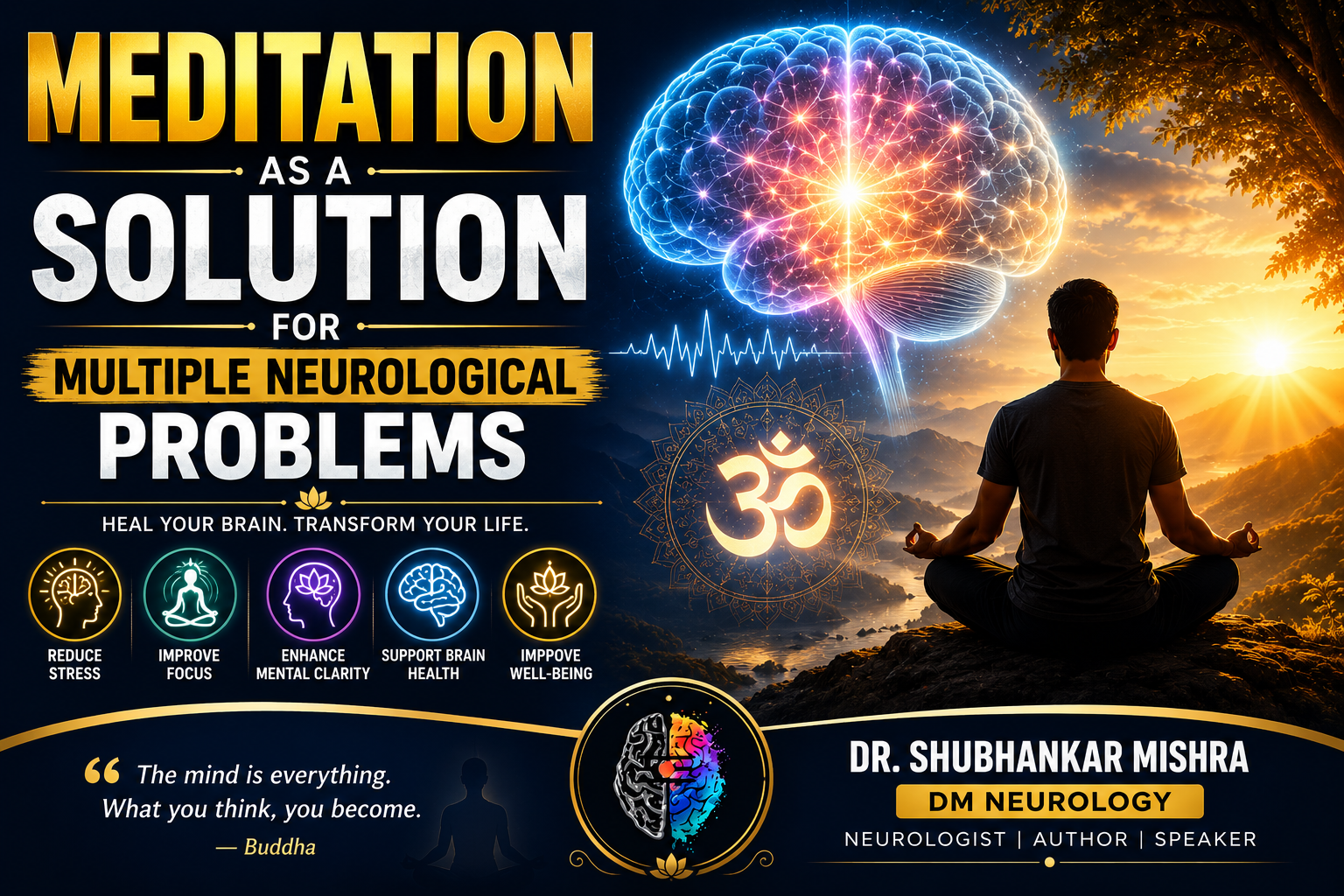

In an age of constant notifications, endless screen time, chronic stress, and sleep deprivation, the human brain is under unprecedented pressure. Neurological disorders such as migraine, anxiety, insomnia, chronic pain, cognitive decline, and even neurodegenerative diseases are becoming increasingly common.
While modern medicine offers remarkable treatments, an ancient practice continues to gain scientific validation as a powerful complement to neurological health: meditation.
Far from being merely a spiritual exercise, meditation is now recognized as a brain-training technique capable of producing measurable changes in brain structure and function. Neuroscientists across the world have documented its benefits through advanced neuroimaging studies, EEG analyses, and clinical trials.
What Happens in the Brain During Meditation?
– Meditation involves focused -Attention and heightened awareness.

Brain imaging studies have demonstrated that regular meditation can:
– Strengthen neural connections
– Increase gray matter density
– Improve attention and concentration
– Reduce stress-related brain activity
– Enhance emotional regulation
– Improve sleep quality
Regular meditators show increased activity in areas responsible for self-awareness, memory, and executive function while demonstrating reduced activity in the brain’s stress circuits.
1. Migraine and Chronic Headache
Stress is one of the most common triggers for migraine attacks. Meditation reduces sympathetic nervous system overactivity and decreases the release of stress hormones such as cortisol.
Several studies have shown that mindfulness-based meditation can:
– Reduce headache frequency
– Lower headache intensity
– Improve quality of life
– Reduce dependence on pain medications
For many patients, meditation acts as a valuable adjunct to medical treatment.
2. Anxiety and Panic Disorders
The amygdala, the brain’s fear center, becomes hyperactive in anxiety disorders.
Meditation helps by:
– Calming excessive amygdala activity
– Improving emotional resilience
– Reducing worry and rumination
– Enhancing parasympathetic activity
Even 10–15 minutes of daily meditation can significantly reduce anxiety symptoms over time.
3. Insomnia and Poor Sleep
Sleep is essential for brain repair and memory consolidation. Unfortunately, millions struggle with insomnia due to stress and overthinking.
Meditation promotes relaxation by:
– Slowing brain waves
– Reducing mental chatter
– Lowering heart rate
– Facilitating natural sleep onset
Many patients report better sleep quality within a few weeks of consistent practice.
4. Chronic Pain Syndromes
Pain is not merely a sensation; it is an experience shaped by the brain.
Research has shown that meditation can alter pain perception by influencing pain-processing networks within the brain.
Patients suffering from:
– Chronic back pain
– Fibromyalgia
– Neuropathic pain
– Cervical and lumbar spondylosis
often experience reduced pain intensity and improved coping ability through regular meditation practice.
5. Epilepsy
Although meditation is not a substitute for antiepileptic medications, stress reduction may help reduce seizure triggers in some patients.
Meditation can:
– Improve emotional well-being
– Reduce anxiety related to epilepsy
– Improve sleep patterns
– Enhance quality of life
Patients should continue prescribed medications and discuss complementary practices with their neurologist.
6. Memory Problems and Cognitive Decline
One of the most exciting areas of meditation research involves cognition and aging.
Studies suggest that meditation may:
– Improve attention span
– Enhance working memory
– Slow age-related cognitive decline
– Improve mental clarity
Meditation increases blood flow to critical cognitive networks and may help preserve brain function as we age.
7. Parkinson’s Disease
Patients with Parkinson’s disease frequently experience:
– Anxiety
– Depression
– Sleep disturbances
– Stress-related symptom fluctuations
Meditation has been shown to improve emotional health and overall well-being, helping patients better manage the challenges of chronic neurological disease.
8. Stroke Recovery
Recovery after stroke involves neuroplasticity—the brain’s ability to reorganize itself.
Meditation may contribute by:
– Improving attention
– Enhancing emotional stability
– Reducing post-stroke depression
– Supporting rehabilitation efforts
Although not a replacement for physiotherapy or medical treatment, meditation can be a valuable supportive tool.
The Science of Neuroplasticity
One reason meditation is so powerful is its ability to promote neuroplasticity. The brain is not a fixed organ. Throughout life, it continuously forms new neural connections based on experiences and habits.
Meditation repeatedly activates circuits related to attention, awareness, and emotional regulation. Over time, these pathways become stronger, resulting in measurable improvements in mental and neurological health.
How to Start Meditating
Beginners can follow these simple steps:
1. Sit comfortably in a quiet place.
2. Close your eyes gently.
3. Focus on your natural breathing.
4. Observe thoughts without judgment.
5. Return attention to the breath whenever the mind wanders.
6. Practice for 5–10 minutes daily initially.
7. Gradually increase to 20–30 minutes.
Consistency matters more than duration.
Ancient Wisdom Meets Modern Neuroscience
Thousands of years ago, Indian sages described meditation as a path toward inner balance and self-realization. Today, neuroscience confirms that meditation can reshape the brain, reduce stress, and improve neurological well-being.
While meditation is not a cure for every neurological disorder, it is one of the safest, most accessible, and scientifically supported tools available to enhance brain health.
As a neurologist, I often remind my patients that medicines can heal disease, but practices such as meditation help cultivate resilience, clarity, and long-term neurological wellness.
The most powerful pharmacy may not always be found in a pill bottle—it may begin with a single conscious breath.
Happy yoga day. Please read and share so that awareness can spread.
Happy Sunday
Har Har Mahadev.
Leave a Reply