
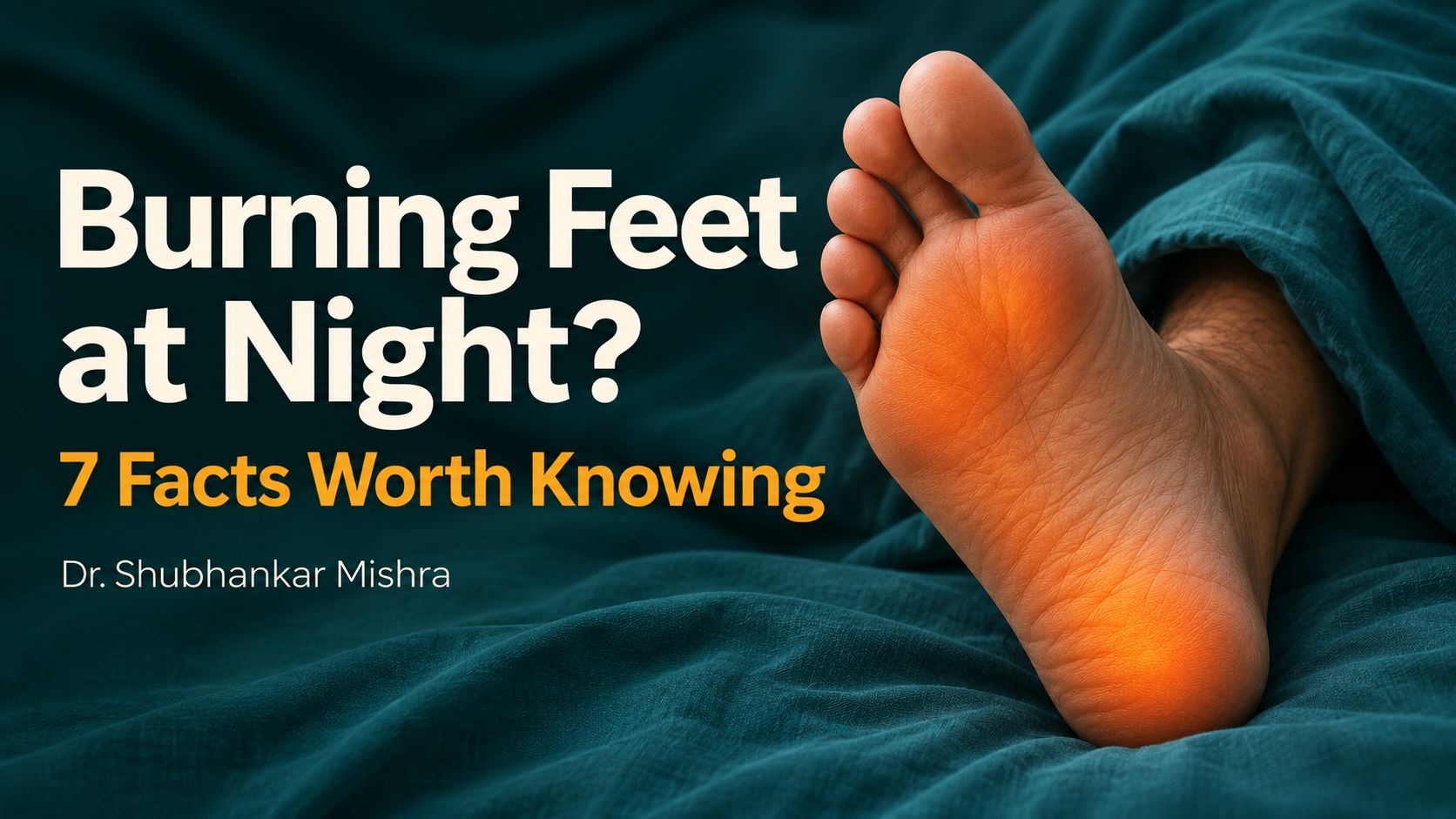

You’re about to fall asleep when the soles of your feet start to burn. You push the bedsheet aside, look at your feet and see nothing unusual. What could explain it? Start by noticing when the burning happens, whether it affects one foot or both, and what else you feel. Those details can help your doctor work out the cause.
1. Your feet can feel hot even when the skin looks normal
The nerves in your feet carry signals about touch, pain and temperature. When these nerves are damaged, you may feel burning, pins and needles or sudden jolts of pain even when there’s no visible burn. Doctors call this type of nerve damage peripheral neuropathy.
2. Nerve pain often feels worse at night
For some people, even the brush of a bedsheet against their toes becomes painful. If this keeps waking you, mention it at your appointment. Describing what a light touch feels like tells your doctor more than simply saying, “My feet hurt.”
3. Diabetes can cause both burning and numbness
Diabetes-related nerve damage often affects both feet. Your toes may burn while you’re resting, yet you might barely feel a blister when walking. If you have diabetes, check the soles and spaces between your toes daily. A hand mirror helps you see the areas you might miss.
4. A vitamin B12 deficiency is another possible cause
Persistent burning or tingling can also occur with vitamin B12 deficiency. If symptoms keep returning, your doctor may check your B12 level and blood sugar. Finding a deficiency matters because it can be treated.
5. Itching and peeling point to a skin problem
Take a look between your toes. Itchy, flaky skin or small cracks alongside the burning can suggest athlete’s foot, a common fungal infection. Dry carefully between the toes after bathing. A pharmacist can advise you about antifungal treatment.
6. Gentle cooling can bring relief
If your feet feel overheated, loosen your shoes, change out of damp socks and try a fan for a few minutes. Avoid pressing ice against your soles or soaking them in ice water. Extreme cold can injure the skin, particularly when your feet have reduced sensation.
7. Some changes deserve same-day care
Book a check-up if burning keeps returning, spreads up your legs or comes with numbness. Seek same-day care if a foot suddenly becomes red, hot and swollen, especially if you have diabetes. Spreading redness or pus from a wound also needs prompt attention, even when there’s little pain.
Leave a Reply