
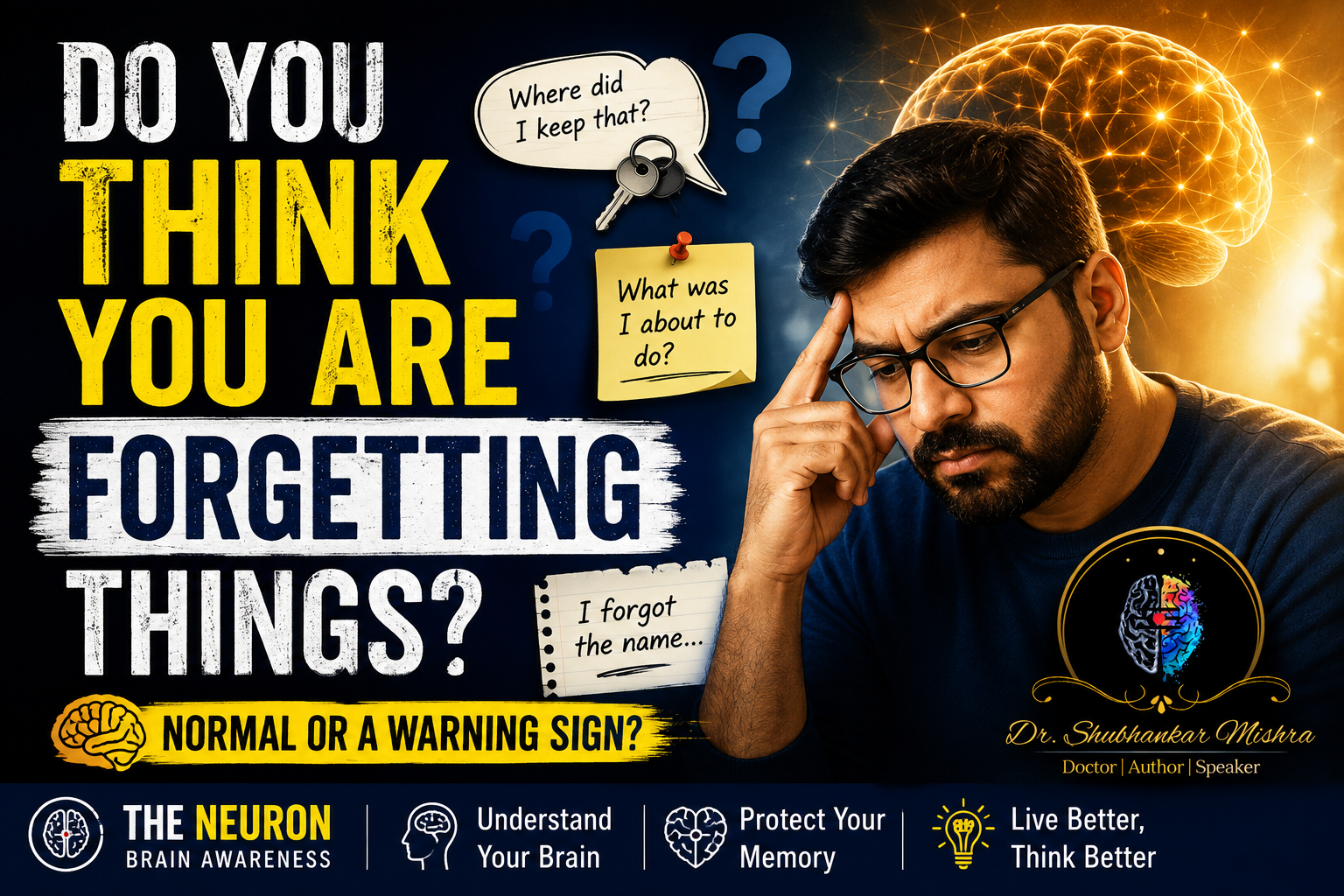

You walked into a room and forgot why you came there. You searched for your spectacles while they were already on your head. You opened your phone—and suddenly forgot what you wanted to do.
Then comes the uncomfortable thought:
“Is my memory getting weak?”
Occasional forgetfulness is normal. But when it becomes frequent, progressive, or begins affecting everyday life, it deserves attention.
Why Do We Forget?
Memory begins with attention. If the brain does not properly register information, it cannot retrieve it later. This is why stress, poor sleep, multitasking, constant notifications and excessive scrolling can make us feel unusually forgetful. Sometimes the problem is not memory loss—it is poor attention at the time the memory was formed.
Everyday Forgetfulness That Is Usually Normal
Occasionally forgetting:
- someone’s name but remembering it later,
- where you kept your keys,
- why you entered a room,
- an appointment,
- a familiar word for a few seconds,
does not automatically mean dementia.
The more important question is:
“Is my forgetfulness beginning to interfere with my life?”
Common Reasons Your Memory May Feel Worse
Poor sleep
Sleep is essential for attention and memory consolidation.
Stress and anxiety
A constantly worried brain has less attention available for new information.
Digital overload
Repeated switching between reels, messages and notifications fragments attention.
Depression
Depression may affect concentration, processing speed and memory.
Medical causes
Thyroid disorders, vitamin deficiencies, sleep disorders and certain medicines can sometimes affect cognition.
Ageing
Recall may become slightly slower with age. This is different from progressive loss of everyday abilities.
When Should You Be Concerned?
Seek medical evaluation if forgetfulness is progressively worsening, especially when there is:
- repeated questioning,
- forgetting recent conversations completely,
- getting lost in familiar places,
- difficulty managing money or medicines,
- inability to perform previously familiar tasks,
- increasing difficulty following conversations,
- significant personality or behavioural change,
- declining independence.
A Simple Way to Understand the Difference
Normal: You forget where you kept your keys.
Concerning: You forget what the keys are for.
Normal: You forget someone’s name and remember it later.
Concerning: You repeatedly fail to recognize a familiar person.
The key difference is often frequency, progression and impact on daily functioning.
Protect Your Memory
Sleep well. Exercise regularly. Control diabetes, blood pressure and cholesterol. Stay socially connected. Read, learn and have meaningful conversations.
And perhaps most importantly:
Give your brain periods of uninterrupted attention.
A constantly distracted brain may appear forgetful simply because it never had enough attention to form the memory properly.
The Take-Home Message
Occasional forgetfulness is human.
But if memory problems are gradually increasing and beginning to affect work, relationships, navigation, finances or independence, do not simply dismiss them as ageing.
When forgetfulness begins changing everyday life, it is worth listening to what your brain may be telling you.
For educational purposes only. Persistent or progressive memory problems should be medically evaluated.
Please read and share.
Happy Sunday!!!
Leave a Reply